Is Transition Planning Preparing Students for Life After High School?
Students spend years developing academic skills, receiving services, and working toward IEP goals. But an important question remains:
Are they building the skills they will need after graduation?
Transition planning is most effective when decisions are informed by meaningful assessment data. A transition readiness assessment helps educational teams better understand a student’s strengths, support needs, and readiness across a range of areas related to adult life.
The results can help guide transition-focused IEP development, postsecondary planning, and educational programming that prepares students for life after high school.
What Is a Transition Readiness Assessment?
A transition readiness assessment is a structured process used to evaluate a student’s current skills, interests, strengths, and areas for growth as they prepare for adulthood.
The goal is not simply to identify challenges. It is to provide practical information that can help teams answer important questions:
What is this student working toward after high school?
What skills have already been developed?
What areas may need additional instruction, support, or experience?
How well does the current IEP support the student’s future goals?
A strong assessment helps connect today’s educational programming with tomorrow’s outcomes.
Middle school students beginning transition planning High school students preparing for graduation Students exploring college, employment, or vocational pathways Students who may need additional support with independent living or self-advocacy Educational teams seeking additional data to guide planning
How Schools Use Transition Readiness Assessments
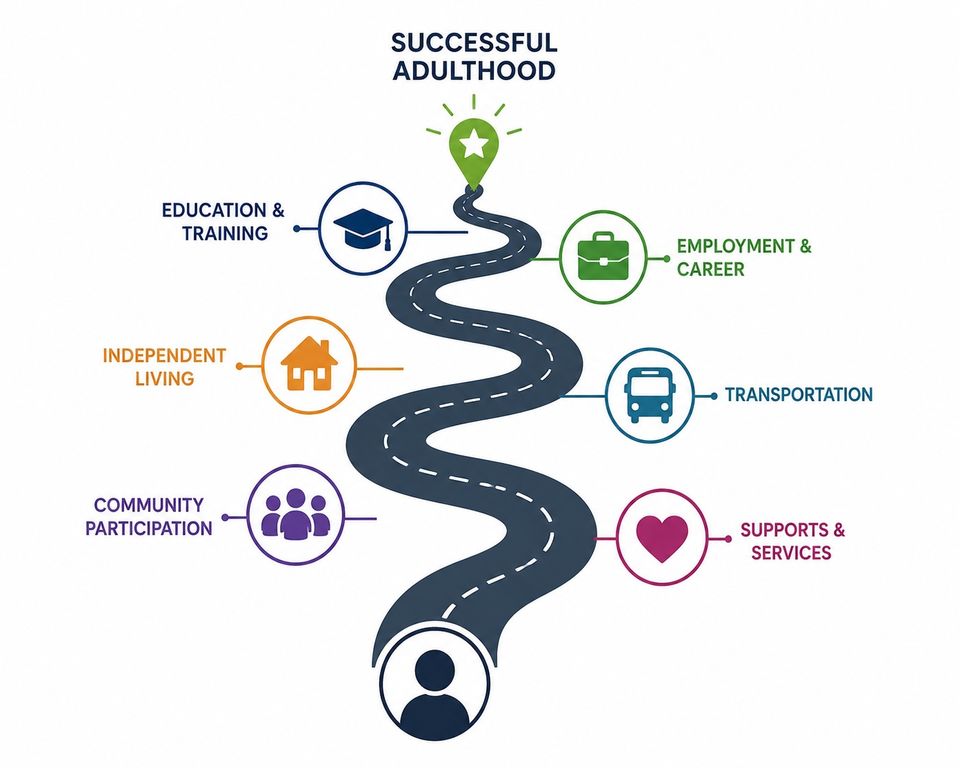
Guide transition-focused IEP development Inform measurable postsecondary goals Identify student strengths and support needs Prioritize transition services and activities Support planning for employment, education, and independent living Monitor student progress over time
My Approach
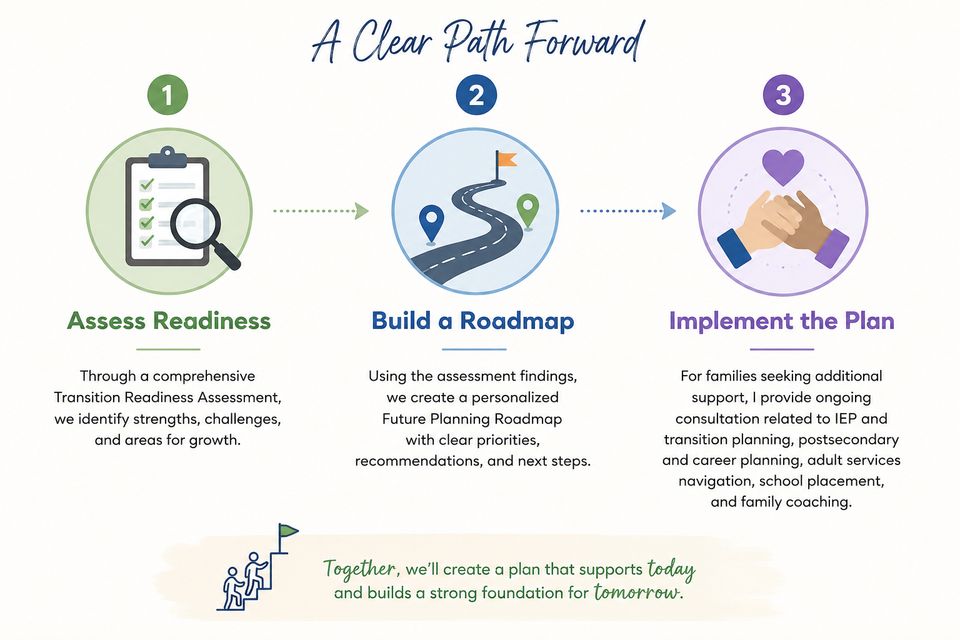
Gather Information
Review existing evaluations, IEPs, transition plans, progress data, and student input to develop a clear understanding of the student’s current functioning and goals.
Identify Strengths & Areas for Growth
Examine skills related to postsecondary education, employment, independent living, and self-advocacy.
Connect Assessment to Planning
Translate assessment findings into practical recommendations that can support transition-focused IEP development and future planning.
Support Meaningful Next Steps
Provide information that helps teams determine priorities, identify opportunities for skill development, and better align programming with post-school goals.
From Assessment to Action
A transition readiness assessment should not end with a report.
The most valuable assessments help educators, students, and families better understand where a student is today and what steps can help them move toward their goals for life after high school. When used thoughtfully, assessment results can strengthen transition planning, guide educational programming, and help ensure that the IEP serves as a roadmap for the future.
Interested in learning more about transition readiness assessments for your school, district, or program? Let’s connect.